In Citizen Sleeper 1 you meet a father who is trying to provide a better future for his daughter. For that he thinks he has to get on board of a spacecraft to escape the station you are currently on and to eventually settle on a real planet. However, to get onto the spacecraft, he needs to help in its construction. He can’t do that without leaving his daughter unattended. So he asks you to babysit her.
And you would, like any decent human being would. But you are a sleeper. That means your body is decaying every day a little more, so you need scraps to fix it or money to buy pills that stop the decay for a few days. Also you get hungry quickly and you need money for food. And let’s not forget, you are being hunted down. You know in a few days the hunter will arrive. Until then you have to have found a way to escape or find protection or remove the tracker in your body. Babysitting doesn’t help you to progress towards any of those goals. Neither does it give you money or scraps to sustain yourself. But it does cost actions – valuable time.
So when I played Citizen Sleeper I put the babysitting on a backburner. I focused first on my problem. But I felt bad and I hoped I had still time to babysit, after everything is taken care of. In fact I even tried to optimize my decisions in the hopes to have enough resources and time left to help the duo.
Unfortunately I did.
I say unfortunately, because when I realized that I had more than enough resources and time left, the game stopped being interesting.
As soon as I had removed the tracker I had no time pressure at all anymore. What had been difficult decisionmaking and strategizing before, now has been reduced to doing chores. It is unfortunate because before I was mentally and morally engaged. The lack of a reward for the babysitting made me even consider if, as a Sleeper – a machine doomed to decay – if at some point I had to give up on self-preservation and instead use the time I have to help the real humans around me. The loss of time pressure made this question irrelevant. Because I could do both.
So, my point of this article is this: In a game it is easy to differentiate morally right from wrong. But introduce resource management and time pressure, and the question becomes more complicated.
Humanity vs. resource management
The observation I made in Citizen Sleeper reminded me of another game: Suzerain. Suzerain is a strategic simulator, where you take on the role of a newly elected president of a troubled country. You have to navigate politics, to stabilize your state and stay in power. Some decisions cost a budget, which you only have a limited amount of, but otherwise there were no resources. The decisions are still interesting because you have to balance the interests of different social groups. Yet even with the occasional compromise, it was easy to find the morally safe choices that lead to a strengthening of democracy, more rights for the populace, etc.
But Suzerain has a DLC, where you take on the role of the king of another country. The gameplay is similar. But it introduces more resources. Now there is money, energy and authority. There is also a freer system of investment. While as president you could spend budget on some scripted decisions, in the DLC now, there is a list of investments like factories and other infrastructures and you can enact laws outside the script, but it costs authority to do so. There was now also the possibility of war and the option to improve your army.
The newly introduced system now fully shifted my playstyle. While as president I focused on improving the wellbeing of the populace, I now was preoccupied with resource management.
I didn’t abandon the populace fully. But my calculations weren’t about how I could bring reform without destabilizing the country anymore. They were now about how can I give myself more options in the next round. Investing wisely meant I had more resources later on. And sure, I could invest those in some social reform, but I also could have even more resources later on. And social reform often meant reducing your resource income.
So these two systems – social reform and resource management – created opposite goals and thus each decision was a crucial and interesting one.
No rewards for empathy and morality?
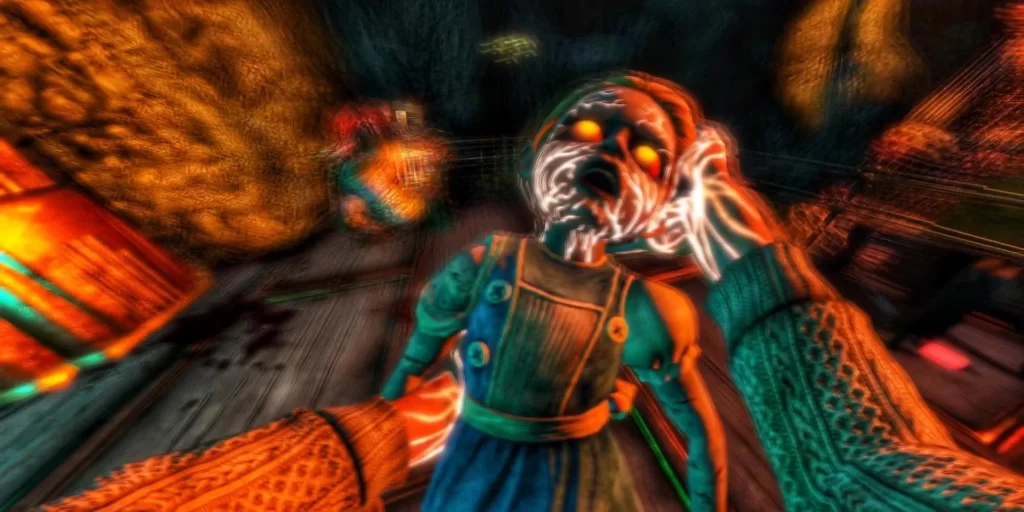
In the first Bioshock you are presented with a simple choice: Harvest the little sisters and get an important resource that gives you cool powers, or save them and get less of that resource. The game tries to make a point that morality is more important than pragmatic decisions. For that reason harvesting leads to a bad ending and saving leads to a good ending. But the game also rewards you mechanically for saving the sisters. Even if you get less resources for each sister, from time to time one of the saved ones gives you a present that makes up for the lost resources – and then some. Again, the game tries to make a point that empathy might bring you less value in the moment, it gets rewarded with patience.
But ultimately it nullifies the choice of saving or harvesting the little sisters null. Because saving is now not only the morally right thing to do but also the strategically right thing to do. There is no dilemma. The case could be made that games should not mechanically reward morally right decisions. Otherwise moral decisions become about aesthetics: Do I want to play as the villain or as the hero now? That way the players are not prompted to deal with their morality.
However, rewards in videogames are used to encourage a certain behaviour. So if the immoral gets rewarded and the moral isn’t or it gets even punished, the game now propagates immoral behaviour. So it must be done with care, and in the story clearly signalled, that the immoral has dire consequences. A good example is Undertale, where killing enemies lets you level up and makes you stronger, while befriending them lets you stay on your first level, with little HP. The game becomes way more difficult. But the story rewards your moral gameplay and punishes your immoral gameplay.
Also it is important to note, in the real world empathy and morally sound behaviour often do give value. It just comes belated and often hidden. This can work in game mechanics too. In Suzerain for example; while resources make your life easier, the goal is still to stabilize your country. And that stability comes from attending to the populace’s demands. Exploiting the resources and work from them, without giving anything in return, will most likely end in a powerloss.
Lastly, morality can serve as a reward in itself. Let’s go back to Citizen Sleeper: What if it would have been relatively easy to escape your hunter. But it would have been more difficult yet still doable to escape your hunter and help the father-daughter-duo. The moral victory would have acted as the reward for your efficient decision making.