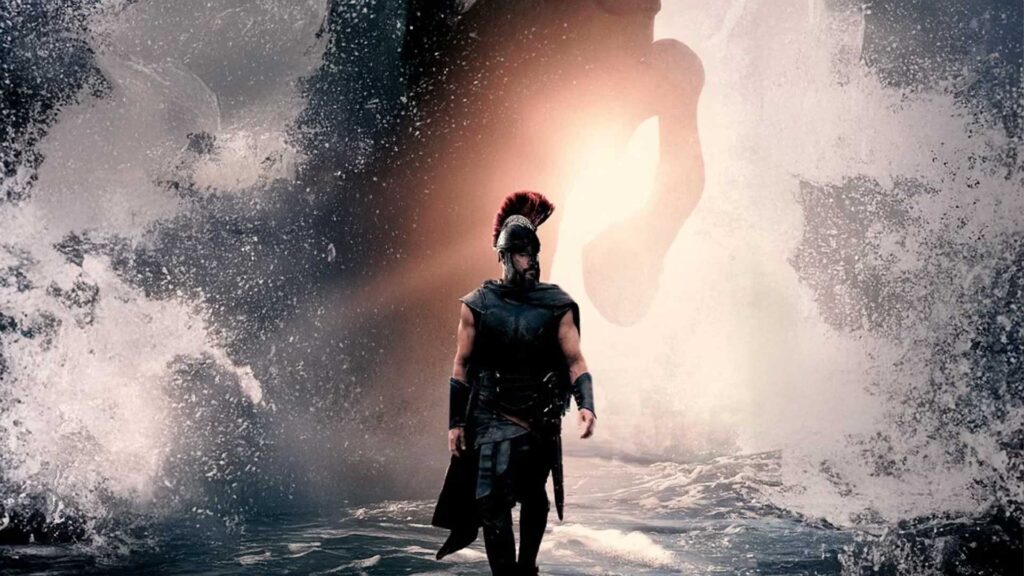
One of the most celebrated storytellers of our time – Christopher Nolan – adapted a monumental story of possibly the most influential storyteller of ancient Greece – Homer – to film. The Odyssey was bound to be an extraordinary event. Yet I left the theatre a little disappointed. Granted, I didn’t experience the movie as intended on IMAX. And don’t get me wrong, I still enjoyed the full three hours of the film and was greatly entertained. But still, it felt empty.
Let’s look at the decisions Nolan made while adapting the Odyssey and let me tell you what I would have done differently. I don’t mean to imply I know better than Christopher Nolan. It’s just a fun exercise for me. Please let me know what you think of my “corrections”. The article contains spoilers for the movie (as well as for the poem, but that is thousands of years old, so … keep up).
The Themes
Homer’s Odyssey has a number of themes woven into the narrative. Two of the most important among these are hospitality or guest-host-relationship and homecoming. To a lesser extent there is also the theme of leadership explored.
The most interesting choice Nolan makes is to frame Odysseus’ journey as a consequence of the Troy war. In the original of course the journey takes place after the fall of Troy as well, but for Homer the story of Troy is completed with the end of the Iliad and the Odyssey is a new story entirely.
Nolan interprets the fall of Troy as a tragedy that heralds the fall of civilization and the coming of a new dark age of war. Odysseus with his cunning idea of infiltrating the impenetrable walls of Troy with the wooden horse, takes on a great part of responsibility for the destruction of the world. This fits perfectly in Nolan’s exploration of the responsibility of “great” men with “great” ideas that he already undertakes in Oppenheimer. However, in my opinion, the Odyssey does not have a lot to add to the discussion of that particular theme. The equation of the fall of Troy with the fall of civilization is way more interesting, since it can be placed in Homer’s exploration of hospitality. In that perspective hospitality is civilization and the lack thereof is barbarism. I think it’s a great decision by Nolan, since hospitality is not a very modern concern anymore. The decay of civilization on the other hand is a very timely theme to explore, with the erosion of the so-called rule based order.
Leadership too is explored in Nolan’s Odyssey. In my opinion however it could be more prevalent. So in my adaptation I would keep Nolan’s focus on the fall of civilization – in fact, I would keep everything that has to do with Troy, these parts were the best parts in the movie for me. I would then elevate the theme of leadership to a more prevalent part of the story. The main conflict of the story should be between Odysseus as a leader and his crew as his responsibility. This thought is of course inspired by what I saw in Nolan’s Odyssey, but in my opinion one could have focused on it a little more. The story could be about a leader’s struggle to steer his followers – and himself – away from barbarism, towards civilization, while everything in the world points towards the maw of barbarism.
The Chapters
Not counting the departure from Troy and the Arrival in Ithaca, in Homer’s poem, there are twelve stations of Odysseus’ journey. Nolan rightfully shortened that list for his adaptation with some great choices, some creative solutions and some questionable decisions. Let’s have a look at these “chapters”, what Homer I think intended them for, how Nolan used them, and what I would have done with them.
- The failed raid on the Ciconnes.
- Lotus-eaters keep them from wanting to go home.
- Encountering the Cyclops and evoking Posidon’s wrath
- Obtaining the bag of Winds leading to failure at the destination.
- The giant Laestrygarians destroy all but one ship
- Circe and the pigs
- Speaking with the dead at the end of Oceanus
- Passing the sirens
- The choice between the whirlpool and the monster Scylla
- The slaughter of Helios’ sacred cattle and the destruction of the last ship in its wake
- Odysseus is captured by Calypso
- The Phaeacians show Odysseus true hospitality
One Choice changes (almost) everything
Immediately the choice of including Troy as an integral part of the story creates two problems. Homer starts with the raid on the Ciconnes to introduce Odysseus and his men as soldiers, but also to show their first failure and to sow the first seeds of distrust between crew and leader. Now, if Troy takes on a more important role in the adaptation, we don’t have to introduce the characters as soldiers anymore. The setting of the raid would become more of the same and therefore it would be boring for the audience. This is unfortunate, because the Ciconnes-raid provides good opportunities to introduce the themes of leadership and the end of civilization.
The second problem is the Cyclops. In Homer’s poem it is the inciting incident. Odysseus’ offense of the creature leads to Poseidon opposing his journey home. The way Nolan frames it, the odyssey is a punishment for Odysseus’ destruction of civilization in Troy. The main purpose of the Cyclops-encounter is now obsolete. However that very encounter is one of the most famous scenes of the odyssey, and you just can’t present the audience with an adaptation, where it’s missing.
Nolan chose not to focus on the Ciconnes-raid (it is shown quickly, without much pondering on its meaning) and to show the Cyclops. Good choices from a spectacle-perspective. But maybe these were the first choices that led to me feeling like the movie is a bit empty of theme and purpose. Nolan also left out the bag of winds. Probably because of its too fantastical appeal.The lotus-eaters he tied in with the much later captivity of Odysseus with Calypso, which I think is a great condensation. With that all being said, how would I start Odysseus’ journey?
I think, thematically, it is too good to pass up on the Ciconnes-raid. But let’s not focus on the violence. Focus on the conflict between Odysseus and the crew. In fact, it is an excellent opportunity to introduce that conflict. Odysseus lets the crew raid but stops them from desecrating a temple. That would also fit into his guilt of desecrating Athene’s temple in Troy, which is revealed later in Nolan’s film. The crew argues “but that’s where they usually hide their gold”. To which Odysseus answers, that they don’t need gold to get home, just supplies. While his men are raiding the rest of the city, descending into barbarism, he enters the temple. There the priest shows thankfulness for being spared, by handing Odysseus the bag of unfavorable winds. A gift to let him and his crew get home quickly. A reward for honoring civilization.
But when Odysseus returns with the bag of winds, the crew thinks he stole the gold from the temple for himself. This is the first rift of distrust between leader and crew. It’s not failure that creates that rift, it is victory that poisons their mind. With that raid Odysseus has gotten the supplies and the blessing needed for the journey home.Yet distrust among each other turns that victory into a defeat. It is Odysseus’ fault. For he was the first to not to trust the others by not telling them what is in the bag. Inevitably, the crew steals the bag, unleashing the unfavorable winds, which turn into a storm, leading Odysseus’ fleet astray.
The force of Nature
While the encounter with the cyclops, Circe or the sirens are the most famous parts of the Odyssey, the Laestrygarians are a lesser known obstacle on Odysseus’ journey. Yet they fulfil an important purpose in Homer’s poem. Their destruction of all but one ship signifies the transition of the story from the return of a victorious army to the survival of lost stragglers. I imagine this importance in the story led to Nolan’s choice to keep that episode in his movie. However, they are lesser known for a reason. They are boring and forgettable. By design, yes – they are no characters but meant to be a force of nature, that Odysseus cannot best with his intelligence. Nolan wanted to show that by anxiety inducing chaos during the scene. Yet unfortunately, for me it was just a boring sequence with bad action, that left me thinking “what was that supposed to be?”, when it was over. I think Nolan’s scene missed the mark in showing the heaviness of Odysseus losing most of his fleet.
I personally am not a fan of the Laestrygarians – not in Homer’s original nor in Nolan’s adaptation. If they are meant to be a force of nature, why not simply replace them by a real force of nature, such as a storm? Well, Homer is also using them to show a bad example of hospitality. At least Nolan, maybe Homer as well, uses them to show that Odysseus has now arrived in an unknown and hostile world. So these two points would be lost by replacing the giants with a simple storm.
What we would gain however is rising tensions between leader and crew. And we would even have a reason for the storm: The unleashed bag of unfavourable winds. Even though the storm would be the crew’s fault, because they unleashed it, during battling it, they see that even the great Odysseus cannot do anything about it. Him helping during the storm in positions of his crew, might be admirable but also shows that he isn’t that different from them – insignificant in the wrath of gods / nature. Even that Odysseus’ ship is the only one surviving shows two sides of Odysseus’ leadership. Maybe it is his intelligence that helps this particular ship to survive, which would make him a good leader on this ship. But he was responsible for the whole fleet and his prowess wasn’t enough to keep them all safe. This is his failure. The struggle against a storm would make for more interesting action scenes in my opinion. Scenes that could highlight the complicated relationship between crew and leader.
A quest in a mythical World
In storytelling there is this principle: The more problems one idea solves, the better the idea is. The bag of winds in my adaptation would lead Odysseus’ fleet astray, create a storm that destroys most of his fleet and transits the story to the next phase (from army to stragglers) – and it would signify a transit from the human to a more fantastical world. The opening of the bag of winds is the first supernatural event in the story. And now we enter a realm where sorceresses, sirens and cyclops seem more plausible.
After the storm the surviving vessel would land at Circe’s island – don’t worry I won’t simply forget about the cyclops, it will come later. But the fact that the crew hasn’t met neither magical nor hostile beings yet, makes the encounter with Circe way more powerful. It makes more sense for the men to be less careful and more trusting. Circe’s trick on them while being a host is the first time the crew is on the receiving end of the destruction of civilization. The mirror Circe holds up to them, like it’s highlighted in Nolan’s film, that they are pigs in disguise, fits well and I would keep that in.
In Homer’s original, Odysseus defeats Circe thanks to the intervention of Hermes. In Nolan’s film it’s more about Odysseus figuring out what’s happening and taking a bird hostage, who turns out to be Circe’s sister. In my rendition, it would be Odysseus’ restraint that lets him win against Circe. He simply is not the pig his men are, which makes her spells powerless against him.
He then needs to convince her that he can lead his men away from the barbarism towards civilization. This would make for an interesting philosophical dialogue with real stakes in the story. The discussion would end in a challenge from her to him. She turns his men back and even tells him the way home, but on the way he has to prove that he can control his men well enough to save them from themselves. A journey now turns into a quest.
The sirens would be the first test. Does he trust his men enough to let them decide over his fate? While in the original it is his curiosity that makes him decide against protecting his ears from the sirens’ song and instead getting bound on the mast, it is not quite clear what compels him to do so in Nolan’s adaptation. In my adaptation it would be to prove a point. I think it would lead to more tension, because while in neither the original nor in Nolan’s Odyssey the threat of the crew freeing him is present, it would be in my adaptation.
The second test is the choice between the whirlpool and the sea monster. Does he trust the crew enough to make the right decision, if he tells them the truth? There is no other choice than the lesser of two evils. In Nolan’s film, the crew sees the whirlpool who kills all but not the monster who kills only six. For them it looks like a choice between certain death and no death at all. Which is why I didn’t quite get the tension between them and Odysseus in that particular scene. I would do it differently: Show the intimidating sea monster and hide the whirlpool behind the next cliff. Odysseus now has to convince them that what seems to them like hardship compared to smooth sailing is actually the better choice for them.
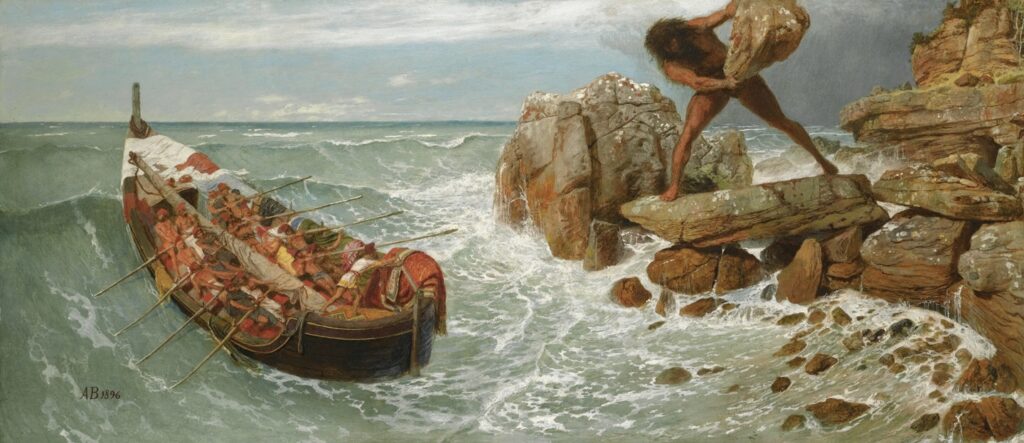
The third and final test is a combination of Helios’ cattle and the encounter with the cyclops. More specifically: The cattle are a herd of sheep and the cyclops is tasked with protecting them. Circe warned Odysseus that they would get punished if they slaughter the sheep and eat them. Upon arriving on the scene Odysseus naturally assumes that they would get punished by the cyclops. First he doesn’t do anything and orders his crew not to interfere with either the cyclops nor the herd. But as they remain stranded on the island due to a lack of wind, he’ll have to become more and more authoritarian towards his crew to keep them away from the herd. Tensions become high and finally he thinks he has a solution. One night they sneak into the cyclops cave. There Odysseus blinds the creature with the same trick as in the original, effectively eliminating the threat of punishment. They steal the sheep, fleeing from the flailing cyclops. They make it to the ship and thanks to new winds manage to leave the island. Yet the cyclops arrives at the beach and starts blindly hurling rocks towards the sea. Seemingly a coincidence, one of them hits the ship, breaking it apart. Odysseus and the crew drift apart, unable to fight against the currents, weakened by their hunger.
In Homer’s poem the cyclops is a bad host, because he does not only not offer them something to eat, but eats them himself. That is not exactly the case here, but the fact that they are starving on his island and he doesn’t offer them any of his sheep should make up for that. At the same time it is Odysseus’ ultimate failure. Not only couldn’t he save his men from themselves, he also descended into barbarism by attacking the cyclops. His cunning intelligence in this instance was his doom rather than his virtue. Thus it is similar to the encounter with the cyclops in the original story. Lastly, I think this scene would make for better cinema, since the Helios’-cattle-episode in Nolan’s movie has no spectacle and is a bit anticlimactic.
Death and resurrection
In the original and in Nolan’s film Odysseus’ visit of the dead at the end of Oceanus is intentional. In my adaptation he would be brought there by the currents, after the ship is destroyed by the cyclops. It is a metaphor for a near death experience. In the limbo he confronts his guilt and his shame of the troy war and of his failure of bringing his men home and especially of destroying civilization and not even being able to keep his men from barbarism. He does so by talking to the dead. He gets, however, a chance to redeem at least the deaths under his command by the prophecy that he needs to journey further west after arriving home. He also gets the warning of possible dangers at home, like he does in the original and Nolan’s adaptation. Afterwards he continues to float through the ocean until Calypso finds him.
I like Nolan’s approach of Calypso feeding Odysseus lotus to make him forget. He’d be eager to forget all the shame and guilt weighing on his shoulders. It’s symbolic of a coping mechanism. It differs greatly from the original, where Odysseus wants to go home and is kept against his will. This is important in the original, because the odyssey was also meant to earn himself the desire to go home. A fascinating notion, but both Nolan’s and my adaptation put less focus on the theme of homecoming, which is why a contrary interpretation of this episode of the story does make sense in my opinion.
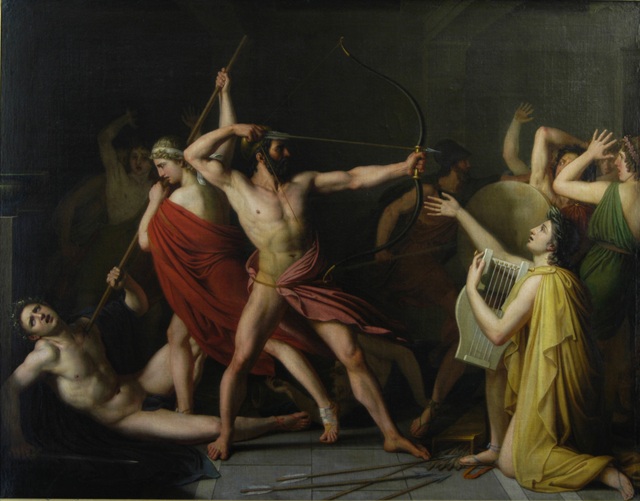
In the original poem Athena asks Zeus to free Odysseus from Calypso’s grasp and he sends Hermes to negotiate. In Nolan’s film, Calypso simply decides one day that Odysseus is now ready to return home, lets him get back his memories and lets him go. Both are Deus Ex Machinas and therefore not great (Homer’s story included gods from the beginning, so for him and his time it is a fair enough explanation).
I instead would let his son come to his rescue.
Let’s change perspective for a moment. During the war and Odysseus journey home, I would leave most of Nolan’s scenes in Ithaka the same. When Telemachus goes to search for his father, I also would let him visit Sparta where he learns from the king’s first hand account of his father’s acts during the war. It is positive, but less legendary than told in the songs of the storytellers. The king however has no news about Odysseus’ whereabouts. Yet a servant at the feast learns about Telemachus’ identity and he tells him, he knows someone who knows more than the legends, more than Troy. Curious, Telemachus follows him, and they visit an old mercenary living in the city. It turns out to be a survivor of Odysseus’ crew. He tells Telemachus the less positive sides of his father, so that the son learns about the duality, the humanity of this leader. The mercenary doesn’t know where Odysseus is located, but points to the island where the currents have brought him, after the ship got destroyed. Telemachus goes to search for his father. After a while he finds him on Calypso’s island.
Odysseus is no leader anymore. He has lost all the men under his command, but now also has lost control over himself. Meanwhile Telemachus is now slowly becoming a leader. His saving of his father seems to be fitting for the themes of the story. While the old generation has tried its best but ultimately failed in fighting barbarism, the new generation picks up the fight, causing hope to not fade away. Telemachus’ ascension to the throne in the end is more earned that way.
In the original, Odysseus first arrives at a city, where the Phaeacians show him great hospitality. That makes him a human again, a part of society. I think Nolan ignored that part, because in his adaptation Odysseus cannot become a normal part of a normal society anymore. And I like that idea. That’s why he can break the hospitality – civilization – once more when he returns home and kills all of his wife’s suitors.
Even though Odysseus returns with Telemachus, they hide his identity at first. I would keep the end mostly the same as in Nolan’s movie. Except the fight scene. It seemed a bit silly. There were ideas I liked: The throwing of weapons through the hole one by one, and some of the men ceasing to attack Odysseus after becoming impressed. However, I would have made them join the fight on his side instead, that way it would have made victory more believable.
The Choices of an adaptation
I believe that adaptations that do not change themes and plot devices to adapt them to current circumstances are senseless. However adaptations that make changes thoughtlessly – maybe to create more spectacle or simply for brevity reasons – are bad works of art. Nolan’s Odyssey is neither senseless nor bad. Yet in my opinion it didn’t go quite far enough in adapting this classic for a modern audience. Homer’s odyssey is quite episodic and not as thematically coherent as modern films are. That is not to say it is any worse, it was just a different storytelling custom during his time. And we will lose something by changing the nature of the story. For example, the Odysseus in Nolan’s adaptation had a bit less dimensions as the Odysseus in Homer’s original. My Odysseus would be less multifaceted still. But that is the point of adaptations. Change. If you want the same story as the original, simply read the original.